
Discover Choice Theory

Choice Theory® is a foundational psychology of human behaviour that explains why we do what we do and how change really happens. At its core, it is based on a simple yet powerful idea: all behaviour is purposeful, and people are driven to meet basic needs in ways they believe will work.

Unlike many traditional approaches that focus on controlling behaviour, correcting symptoms, or changing others, Choice Theory® centers on personal responsibility, internal motivation, and relationships. It helps people understand their own choices first, creating the conditions for meaningful, lasting change without force or compliance.

What makes Choice Theory® different is its respect for human dignity. It does not ask, “How do we make people change?” It asks, “How do people choose, and how can relationships support better choices?”
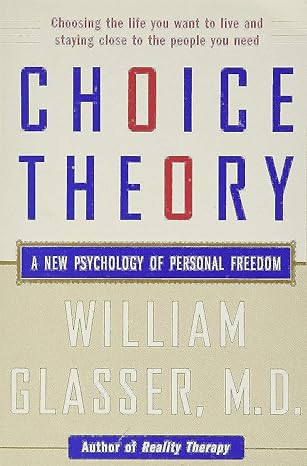
Choice Theory: A New Psychology of Personal Freedom

Applications of Choice Theory

Choice Theory® is highly versatile and practical, which is why it is used across helping professions, education, leadership, and everyday life.

Reality Therapy

A respectful, relationship-based communication process that helps people evaluate their choices, clarify what they want, and move toward change they are willing to sustain. Rather than diagnosing or directing, Reality Therapy® builds insight, responsibility, and ownership.

Education: Quality Schools and Classrooms

Choice Theory® shifts classrooms from control and compliance to connection and responsibility. Educators use it to reduce power struggles, improve student behaviour, and create environments where students feel safe, motivated, and ready to learn.

Leadership and Organizations

In leadership, Choice Theory® replaces external control with self-responsibility. Leaders learn how to improve engagement, reduce conflict, and increase performance without micromanaging or dragging people to success.

Who this is for

Choice Theory® is used by counsellors, coaches, mental health professionals, educators, leaders, community workers, parents, and individuals who want practical tools to improve relationships and outcomes.

Results you can expect

  • Defined clarity on what motivates and drives you and others as individuals
  • Greater engagement and follow-through
  • Stronger, more trusting relationships
  • Reduced conflict and burnout
  • Sustainable change without coercion

What makes this approach different from traditional models is that it works with human motivation rather than against it. Change comes from understanding and choice, not pressure.

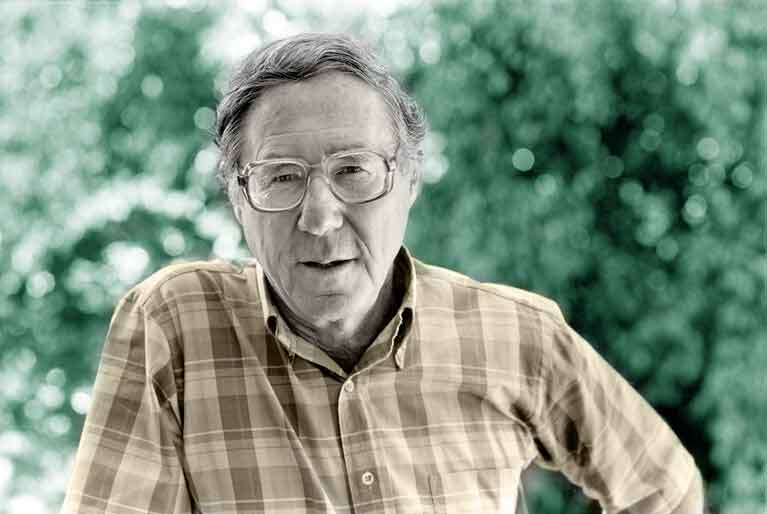
Dr. William Glasser

Dr. William Glasser, founder of Choice Theory®, was a psychiatrist and visionary thinker who was far ahead of his time. At a point when the mental health field was largely focused on diagnosis, pathology, and external control, Dr. Glasser dared to challenge the prevailing model.

He questioned approaches that reduced people to labels or positioned change as something done to them rather than chosen by them. Instead, he proposed a psychology grounded in responsibility, choice, and the power of relationships.

Over several decades, Dr. Glasser developed a comprehensive body of work that includes Choice Theory®, Reality Therapy®, Lead Management, and the Quality School model. His ideas offered a humane and practical alternative, one that respected human dignity while producing real, observable change.

Dr. Glasser believed that most problems in life, work, and school are rooted in disconnection, and that improving relationships is central to mental health and wellbeing. His work continues to influence professionals, educators, leaders, and families around the world through William Glasser International.
Get Connected

Connect with Faculty in Your Region

Learning is most powerful when it is relational. Our global faculty bring Choice Theory® to life through local training, mentorship, and community connection.

Resources

Learn More

Looking to go deeper before taking the next step?

Explore articles, videos, guides, and member resources to continue learning at your own pace.

FAQs

Choice Theory® is a psychological framework, developed by Dr. William Glasser, that explains human behaviour and why we often struggle to create need-satisfying relationships. It is based on the idea that:

  • Behaviour is chosen based on the knowledge, skills and capacity we have at the time 
  • We are internally motivated to meet five basic needs
  • Our actions are driven by our desire to build and maintain meaningful relationships and to meet our basic needs.

It provides a compassionate and practical approach to understanding human behaviour and improving personal and professional relationships.

Choice Theory® is built on several core principles:

  • We can only control our own behaviour, not others. People can agree with this and still need help not to try to control others. Attempting to control others is what Dr. Glasser believed created many of the problems in relationships and personal well-being.
  • All behaviour is purposeful and internally motivated. This principle is a reminder that no matter how confusing or unacceptable a behavior is or looks, underneath there is a purpose. If we look for the intention we can be much more helpful in finding a better solution.
  • Behaviour is driven by five basic needs:
    • Survival
    • Love and belonging
    • Power
    • Freedom
    • Fun

These needs are an incredibly helpful framework for both assessing how well a person is doing and what direction to focus on that will be most helpful. The need for fun may seem odd at first but how happy are people when they don’t meet this need well?. 

  • Lasting change comes from internal motivation, not external control. This principle is not what most people have grown up with or believe to be true. We have all experienced people trying to “motivate “us with rewards or punishment. The power of knowing this principle and the ability to use it when it matters is what can create personal empowerment and freedom. 

Relationships are central to meeting our needs. Dr. Glasser was a pioneer when he first focused on relationships and building healthy ones with his clients. He challenged traditional psychiatry, which believed you should maintain impersonal relationships with clients.

Total behaviour is one of Dr. Glasser’s most powerful concepts, where he explains how four key components of behaviour operate as a whole. The power of this concept is that it allows people and practitioners to understand how all behaviour operates in a practical and self-responsible way. This idea has been taught across multiple contexts and with children as young as 7 years old. Discovering the relationship between how we think, feel and how our bodies function is extremely empowering for all ages and demographics.

“Total Behaviour” refers to the idea that all behaviour consists of four components:

  • Acting
  • Thinking
  • Feeling
  • Physiology

According to Choice Theory:

  • We have the most direct control over acting and thinking. If we focus on our acting and thinking it gives us the most sense of effective control.
  • Feelings and physiology are influenced by our thinking and actions. Based on what we are thinking or doing, our feelings will be in alignment as will be our physiology (body response).

The Quality World is a personal mental space where we store important:

  • People
  • Values
  • Beliefs
  • Experiences

Our behaviour is largely driven by how well our current reality matches what is in our Quality World.

Choice Theory® is not confined to one field. It is applied across multiple contexts where understanding behaviour, strengthening relationships, and supporting meaningful change are essential.

Developed by William Glasser, it serves as a foundation for several well-established applications:

Counselling and Coaching (Reality Therapy®)

In counselling, Choice Theory® is applied through Reality Therapy®.

  • The focus is on helping individuals understand their current behaviour, the needs they are trying to meet, and the choices available to them moving forward. Rather than analyzing the past in depth, the work centers on increasing awareness, responsibility, and the ability to take effective action in the present.

Education (Quality Schools)

In education, Choice Theory® supports the development of what are often called Quality Schools.

  • Teachers and school leaders use the approach to foster student engagement, responsibility, and a stronger sense of belonging. Instead of relying primarily on control and compliance, the emphasis shifts to creating learning environments where students are motivated, connected, and invested in their own progress.

Leadership (Lead Management)

In leadership, Choice Theory® is applied through Lead Management.

  • This approach focuses on leading people in a way that builds trust, ownership, and intrinsic motivation. Leaders move away from managing through control and toward creating conditions where individuals and teams choose to contribute, take responsibility, and perform at a higher level.

Personal Development

  • At an individual level, Choice Theory® provides a framework for improving relationships, decision-making, and overall well-being.
  • People begin to understand their own patterns, what drives their behaviour, and how to make choices that are more aligned with what they truly want. This often leads to greater clarity, stronger relationships, and a deeper sense of personal control. 

Reality Therapy is the practical application of Choice Theory® in counselling and helping relationships.

  • Choice Theory® provides the framework (the “why” something works or doesn’t)
  • Reality Therapy® provides the method (the “how” to approach a situation)

Lead-Management is the application of Choice Theory® in leadership and organisational settings.

It emphasises:

  • Collaboration rather than control
  • Listening and shared decision-making
  • Improving systems rather than blaming individuals

How is Choice Theory® different from other approaches?

Many approaches focus on changing behavior by applying external pressure. Rewards, consequences, systems, and compliance.

Choice Theory® takes a different path.

It focuses on internal motivation. It helps you understand why someone is doing what they’re doing, and how to create the conditions where better choices become possible.

This doesn’t mean lowering expectations. It means increasing influence.

Instead of pushing for short-term behavior change, you build the kind of relationships and environments where people choose to engage, contribute, and take ownership. That shift is what makes the results more consistent and sustainable.

Choice Theory® differs from many traditional approaches in that it:

  • Rejects external control psychology (reward, punishment, coercion)
  • Emphasises internal motivation
  • Focuses on the present and future, rather than the past
  • Prioritises relationships over symptom-focused approaches

Choice Theory® is widely practiced globally and has a strong base in:

  • Educational settings
  • Counselling practice
  • Organisational development

While it may not always align with mainstream “evidence-based” classifications in all regions, it is supported by decades of applied practice and professional use.

Who is Choice Theory® for?

Choice Theory® is for anyone who works with people and wants a more effective way to influence, support, and lead.

This includes:

  • Educators and school leaders
  • Therapists, counselors, and helping professionals
  • Managers, leaders, and HR professionals
  • Coaches and facilitators

It’s also relevant for individuals who want to improve their relationships, communication, and personal effectiveness.

You don’t need a specific background to benefit from it. What matters most is your willingness to reflect, learn, and apply.

What kinds of results can I expect?

People often notice a shift in how they understand and respond to behavior.

Instead of reacting quickly or feeling stuck in the same patterns, they develop more clarity, more choice, and more confidence in how they handle situations.

In practice, this can look like:

  • More productive and respectful conversations
  • Stronger relationships built on trust and accountability
  • Reduced conflict and better conflict resolution
  • Increased engagement and ownership in teams or classrooms
  • A greater sense of calm and control in challenging situations

The results are not about quick fixes. They come from applying the principles consistently and building new patterns over time.

How is this applied in real-life situations?

Choice Theory® is designed to be used in everyday interactions.

In a classroom, it might guide how a teacher responds to disengagement or behavioral challenges.

In a workplace, it shapes how a leader gives feedback, manages performance, or navigates conflict.

In counseling or coaching, it supports individuals in understanding their choices and taking responsibility for change.

The focus is always on what you can do, in the moment, to move the situation forward in a way that protects the relationship and improves the outcome.

Is this useful in professional settings like schools, organizations, or therapy?

Yes. Choice Theory® has been widely applied in all of these settings.

In education, it supports student engagement, responsibility, and relationship-based classroom management.

In organizations, it strengthens leadership, communication, and team effectiveness.

In counseling and coaching, it provides a clear framework for helping individuals take ownership of their choices and move toward meaningful change.

Because it is based on universal human needs and behavior, it translates across environments.

Do I need a background in psychology or counselling?

No. Choice Theory® is accessible and practical. It is designed to be understood and applied by people from a wide range of backgrounds.

While some participants come from psychology or counseling fields, many are educators, leaders, and professionals who simply want a more effective way to work with people.

It’s a thoughtful question, and an important one.

Choice Theory® invites a different way of understanding behaviour, so it’s natural that it raises questions, especially for those coming from more traditional psychological or clinical models. Most critiques reflect differences in perspective rather than flaws in the model itself.

Here are some of the most common concerns, and how they are understood in practice:

“Does this overlook unconscious processes or deeper psychological dynamics?”

Some critics suggest that Choice Theory® may place less emphasis on unconscious drives or processes that sit outside of our awareness.

Choice Theory®, developed by William Glasser, does not deny that people are influenced by patterns, emotions, and experiences they may not fully understand. What it does is bring the focus to what can be recognized and influenced in the present moment.

In application, this often looks like helping individuals become more aware of their patterns and then supporting them in making more effective choices moving forward. The emphasis is less on analyzing the unconscious in depth, and more on increasing awareness and agency where it can make a practical difference.

“Does focusing on choice place too much responsibility on the individual?”

This is a valid concern, particularly in contexts where people are navigating systemic or structural challenges.

Choice Theory® does place a strong emphasis on personal responsibility. At the same time, it does not dismiss the reality of external factors such as environment, culture, or access to resources.

The distinction is in where the work happens.

Rather than focusing only on what cannot be controlled, it helps individuals and professionals identify where influence still exists. This is not about ignoring constraints. It is about avoiding a sense of helplessness and supporting people in taking meaningful action within their reality.

Choice Theory® connects naturally with several well-established approaches in psychology. While it has its own distinct framework, many of its principles align with broader themes found across the field.

It shares common ground with:

Humanistic psychology

  • A focus on personal responsibility, growth, and the belief that people have the capacity to make meaningful choices in their lives.

Cognitive approaches

  • An emphasis on how thinking influences behavior, and how increasing awareness can lead to more effective actions.

Positive psychology

  • A focus on strengths, well-being, and helping people move toward what they want, rather than only addressing problems.

Developed by William Glasser, Choice Theory® brings these elements together into a practical, relationship-centered framework that can be applied across counselling, education, leadership, and personal development.

For many professionals, it doesn’t replace other models. It strengthens how they are understood and applied in real-world situations.

Both Choice Theory® and Cognitive Behavioural Therapy focus on helping people create change in the present.

CBT works by identifying and reshaping unhelpful thought patterns to influence emotions and behaviour.

Choice Theory®, developed by William Glasser, focuses on how behaviour is driven by internal needs and the choices people make to meet them. It emphasizes personal responsibility, relationships, and what can be done differently now.

In practice, CBT centers on changing thinking patterns, while Choice Theory® centers on understanding behaviour holistically (including thinking), strengthening relationships, and improving choice.

Many professionals use both, as they offer complementary perspectives on change.

Choice Theory® can work alongside trauma-informed approaches in a way that strengthens both safety and effectiveness.

Developed by William Glasser, it emphasizes relationships, respect, and internal motivation, which align closely with trauma-informed principles.

In practice, this shows up through:

Promoting safety and connection as the foundation for any meaningful work

Avoiding coercion, punishment, and shame, which can reinforce harm or resistance

Encouraging agency and empowerment, helping individuals regain a sense of control and direction

At the same time, it’s important to apply Choice Theory® with care.

Trauma-informed work recognizes that past experiences continue to shape how a person feels, responds, and makes sense of the present. Choice Theory® acknowledges this by focusing on how those experiences are influencing behaviour now, while still supporting the person in identifying choices that feel safe and possible.

The balance is key.

Practitioners are mindful not to overemphasize personal responsibility in a way that overlooks the impact of trauma. Instead, the focus is on creating conditions where individuals feel supported enough to explore new choices at their own pace. 

Yes. Choice Theory® provides a clear way to understand what is driving behaviour and how to respond in a way that creates movement.

Rather than escalating conflict or trying to force change, it helps you de-escalate, reconnect, and guide the conversation toward more effective choices.

This is what makes it particularly useful in situations where traditional approaches have not worked.

Yes. Choice Theory® is often integrated with:

  • Coaching frameworks
  • Counselling approaches
  • Educational methodologies
  • Leadership development models

Its flexibility allows it to enhance rather than replace other approaches.

Yes. Choice Theory has been applied globally and can be adapted to different cultural contexts. However:

  • Practitioners must remain sensitive to local values, beliefs, and systems
  • Emphasis on relationships makes it particularly adaptable across cultures

Choice Theory® continues to resonate because it speaks directly to the challenges people are navigating right now across relationships, education, and leadership.

Developed by William Glasser, it offers a practical way to understand behaviour without defaulting to judgment or blame. This creates space for more thoughtful, effective responses, especially in high-pressure or complex environments.

Its relevance shows up in a few key ways:

It addresses real, everyday challenges

From disengagement and conflict to motivation and performance, it provides a clear lens for what’s happening and what to do next.

It builds self-management and resilience

By focusing on internal control, people develop the ability to respond rather than react, even in difficult situations.

It supports a shift from control to collaboration

As expectations evolve, influence increasingly depends on trust, connection, and shared ownership. Choice Theory® helps create those conditions. At its core, it offers a grounded understanding of human behaviour and a respectful way of working with others that leads to stronger relationships and more sustainable results.

While anyone can begin applying basic principles, formal training:

  • Deepens understanding
  • Ensures ethical and accurate application
  • Builds practical skills

William Glasser International (WGI) training provides structured pathways for learning and application.

You can start by taking the course:

Take Charge of Your Life, a 6 hour program

  • Attending a Basic Intensive consisting of 4 days which are offered in different formats. 
  • Reading key texts by Dr. William Glasser
  • Engaging with William Glasser International (WGI) training programmes

Upcoming Events and Trainings

  • All
  • Australia
  • UK
  • USA
01 July 2026 11:00 am - 12:30 pm
Making Sense of It
08 July 2026 11:00 am - 12:30 pm
Making Sense of It
15 July 2026 11:00 am - 12:30 pm
Making Sense of It
22 July 2026 11:00 am - 12:30 pm
Making Sense of It